Defining the Obvious
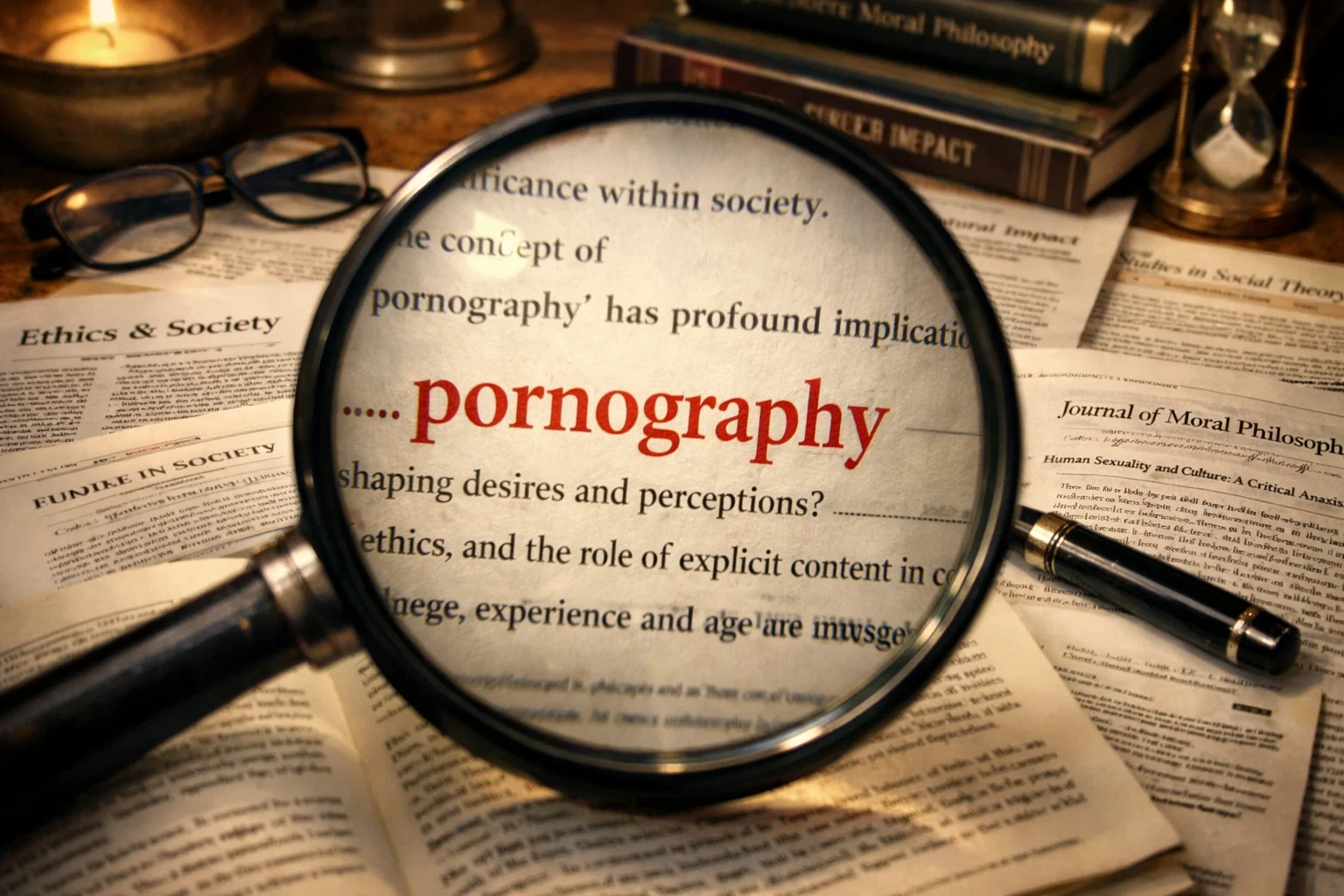
While writing an article about morality and ethics and discussing its principles with my coworkers, the topic of pornography was brought up. I sought out a book—such as the one shown above—as I wanted to learn more about the viewpoints of others and see if I was missing anything. This book was largely a waste of my time. The author explained his viewpoint through a series of drawn-out paragraphs that made sure to nail the same handful of points home as many times as possible. They spoke about a few different perspectives and rationales for the benefits, neutrality, or evils of pornography as well as the harm it may or may not cause to the users, participants, and / or society at large.
- The anti-porn feminists (APFs) argue that porn is bad for women, makes the public perceive them as less valuable than men, makes women earn less money, and raises the amount of violent sexual crimes in a society.
- The pro-porn feminists (PPFs) argue that it is empowering and important for the queers and helps women feel self-empowered.
- The anti-porn, non-feminists (APNFs) argue for similar points to the APFs. They argue that women are harmed, porn is not covered by the First Amendment, and that it damages society at large.
- The pro-porn, non-feminists (PPNFs) argue that porn is a "moral right" afforded to people (like the ability to drink alcohol) and that it may contribute to negative situations for women and society at large, it is protected as "free speech" and not harmful in itself.
What all of these perspectives seem to share is the assumption that pornography carries some built-in moral or social meaning, which I reject. After much consideration and reading a number of books in related fields, it seems to me that pornography is simply a form of communicative, artistic media in which the subject(s) of the media evoke a sexual response for a given audience, whether that media involves people, objects, situations, or purely symbolic themes.
This definition isn't perfect but it gets close enough for my tastes. The content of this media may be abhorrent and disgusting, revered as great art, or simply not that interesting to a given group of people. It all depends on the values of the society that is observing the material. I should also be clear that I do not mean "artistic" in the sense of artistic merit, but simply in the sense that the material is creatively produced, as all photography and videography is. Furthermore, in the same way that photography has no inherent value to someone who cannot see it (such as the blind), the value of pornographic material exists exclusively in the relationship between the work and the observer, not in the work itself. Sure, this means that "anything can be pornography" and "nothing is pornography in itself". I agree with these statements, although they sound absurd. The society I live in classifies pornography in a way that is different than another society, no matter how similar or distinct those differences are. This inherently means that some items I would find to be pornographic in nature aren't seen as such by everyone else on the planet.
Because of this, I found very little of value in a book that treats pornography as if it must be either a social toxin or a social good. To me, that entire debate is built on assumptions I do not share, so the arguments themselves never really get off the ground. If others find meaning, harm, empowerment, or identity in this kind of media, that is their business, but I see no reason to treat those reactions as properties of the material itself. For that reason, this book did not challenge my views so much as confirm that most discussions about pornography are really discussions about people's values, not about the media they are supposedly analyzing.
Lastly, I personally believe that the vast majority of pornography facilitates a negative impact on society by promoting miscegenation, funneling more money into the hands of the (((people))) that produce this content en masse, and in degrading the potential for healthy family relationships between men and women. I waited until the end to share my beliefs as I think it is wise for others to consider how they think about all aspects of life before they decide what they think.